
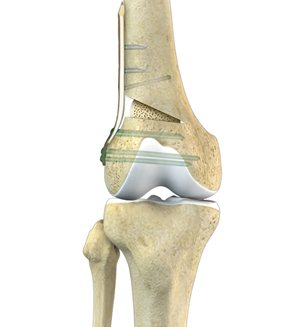
What is Limb Realignment?
Limb realignment is a surgical procedure performed to correct abnormal alignment or deformities of the arms or legs. These deformities may be congenital (present at birth), developmental (occurring during growth), or acquired (due to injury, arthritis, or bone diseases). The procedure aims to restore proper alignment, balance, and function of the limb - allowing for improved movement, reduced pain, and prevention of further joint or bone damage.
When is Limb Realignment Recommended?
Limb realignment is recommended when the bones of the arms or legs are abnormally aligned, causing pain, deformity, or difficulty with movement. It is usually advised when non-surgical treatments, such as braces or physical therapy, are not effective.
Common situations when limb realignment is recommended include the following:
- Bone Deformities: Conditions like bowlegs (genu varum) or knock-knees (genu valgum) that affect walking or cause joint strain.
- Post-Traumatic Malalignment: When a bone heals improperly after a fracture, leading to abnormal limb shape or function.
- Arthritis-Related Deformities: To relieve pain and restore alignment in early stages of osteoarthritis, especially around the knee or hip.
- Leg Length Discrepancy: When one leg is significantly shorter or longer than the other, affecting gait and posture.
- Congenital or Developmental Disorders: Such as Blount’s disease or rickets, which cause abnormal bone growth and alignment.
- Joint Preservation: To delay or prevent the need for joint replacement in young or active patients by redistributing joint load.
What Does the Procedure for Limb Realignment Involve?
In general, the procedure for limb realignment will involve the following steps:
- Detailed imaging studies, such as X-rays, CT scans, or MRIs, are done to assess the deformity. The surgeon plans the exact site and angle of correction needed.
- The patient is given anesthesia, and the affected limb is cleaned and sterilized before surgery.
- The surgeon makes an incision over the affected bone and cuts it at a specific point (called an osteotomy) to allow for repositioning.
- The cut bone segments are carefully repositioned to achieve the desired alignment and restore proper joint and limb mechanics.
- The new bone position is stabilized using internal fixation devices (plates, screws, rods) or an external fixator (such as the Ilizarov frame) that holds the bone in place during healing.
- In some cases, bone grafts are added to fill gaps and promote bone healing.
- Once alignment and fixation are secured, the incision is closed with sutures, and a dressing or cast is applied.
What Happens After a Limb Realignment Procedure?
After a limb realignment procedure, the patient is monitored closely as the bone begins to heal in its new position. Pain and swelling are managed with medication, and the limb may be placed in a brace, cast, or external fixator for protection and stability. Physical therapy usually begins soon after surgery to maintain joint mobility and muscle strength while gradually restoring weight-bearing ability. Follow-up X-rays are taken to ensure the bone is healing properly. Most patients regain normal function over several months, although full recovery may take longer depending on the extent of correction and the patient’s overall health.
What are the Risks and Complications of a Limb Realignment Procedure?
The risks and complications of a limb realignment procedure may include:
- Infection at the surgical site or around fixation devices
- Bleeding or blood clots after surgery
- Nerve or blood vessel injury near the surgical area
- Delayed or non-union (slow or incomplete bone healing)
- Malalignment if the correction shifts during healing
- Joint stiffness or reduced range of motion
- Pain or swelling around the operated limb
- Hardware irritation or loosening that may require removal or adjustment
If you wish to be advised on the most appropriate treatment, please call to schedule an appointment or click to request an appointment online.